A ripped lens can turn one ordinary blink into a sharp, scratchy panic. Knowing what to do if a contact lens tears in your eye helps you remove every piece without scraping the cornea or pushing a fragment farther beneath the eyelid.
My first rule is simple: stop touching the eye until your hands are clean. A torn lens is usually manageable, but careless rubbing or repeated digging can cause more harm than the lens itself.
What To Do If A Contact Lens Tears In Your Eye Immediately
Treat the problem as a careful removal task rather than an emergency extraction. A rough or torn lens edge can rub against the cornea and cause an abrasion, so gentle handling matters.
| Situation | Safest response | What to avoid |
| Lens feels sharp or folded | Stop blinking forcefully and look in a mirror | Rubbing the eyelid |
| Fragment looks dry or stuck | Apply contact-lens rewetting drops | Pulling at a dry piece |
| Piece moves under the lid | Lubricate and blink gently | Digging beneath the lid |
| Fragment becomes visible | Slide it toward the eye’s white area | Pinching directly over the cornea |
| Pain remains after removal | Remove all lens wear and call an eye doctor | Inserting a replacement lens |
Stop Rubbing and Wash Your Hands
Do not rub the affected eye. Rubbing may drag a jagged lens edge across the corneal surface. The American Academy of Ophthalmology also advises against rubbing an eye when an object or possible injury is involved.
Wash your hands with soap and water. Dry them with a clean, lint-free towel. Wet fingers are slippery and may make a thin fragment harder to grip.
Remove rings with sharp edges if they could touch your face. Stand over a clean counter rather than a sink, where a small transparent piece may disappear.
Lubricate the Eye Before Touching the Lens
Add several drops of sterile saline labeled for eye use, preservative-free artificial tears, or contact-lens rewetting drops. Close the eye briefly, then blink gently.
Lubrication helps separate a dry fragment from the eye’s surface. It may also move the piece into a visible position.
Do not place ordinary multipurpose disinfecting solution directly into your eye unless its label specifically permits that use. Not every contact lens solution is formulated as an eye drop.
How to Remove Torn Contact Lens Pieces Safely
The safest answer to what to do if a contact lens tears in your eye is to use patience, moisture, good lighting, and the flat pads of your fingers.
Look straight ahead in a well-lit mirror. Pull the lower lid down and inspect the exposed area. Then look downward while gently lifting the upper eyelid.
A piece can fold high beneath the upper lid, although it cannot travel behind the eyeball. The tissues surrounding the eye prevent that from happening.
Move the Fragment Toward the White of Your Eye
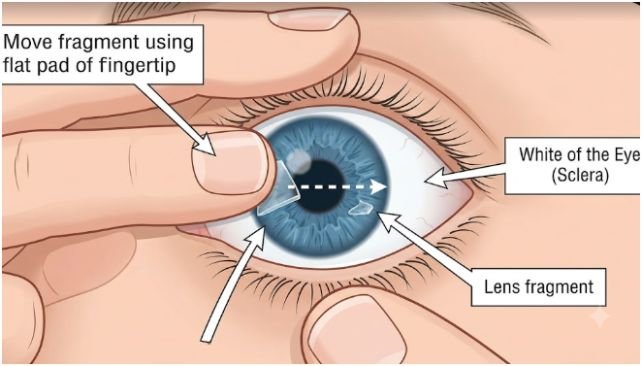
When you see a fragment, do not pinch it directly over the clear cornea. Use the flat pad of a clean fingertip to slide it toward the sclera, which is the white area of the eye.
Once the fragment reaches the sclera, gently pinch it between two finger pads and lift it away. Keep your fingernails pointed away from the eye.
Stop after one or two careful attempts if the piece will not move. Repeated probing can create an abrasion, swelling, or additional irritation.
Use the Two-Check Method
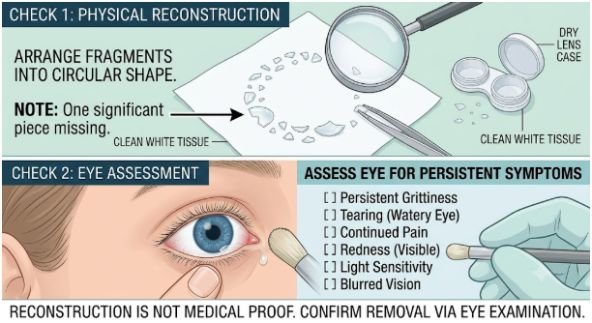
I use two checks before deciding that the removal is complete.
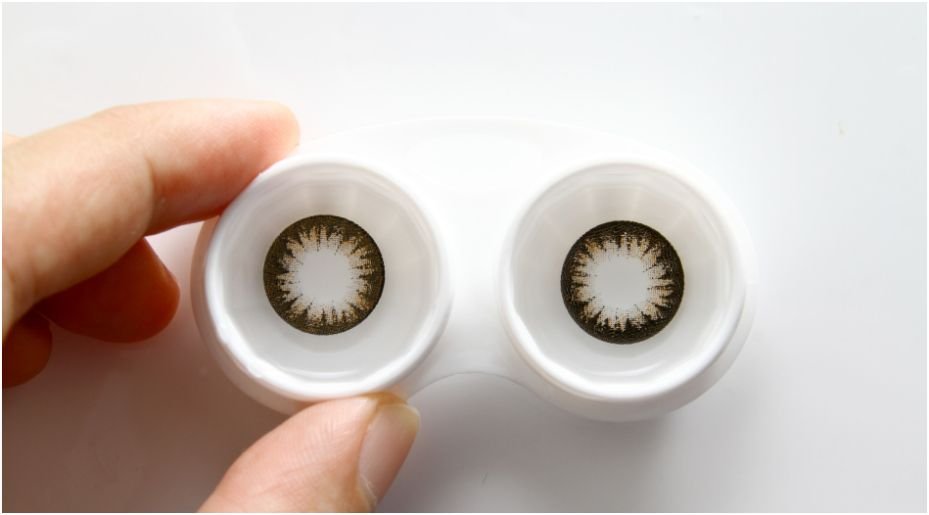
First, place the retrieved pieces on a clean white tissue or in an empty, dry lens case. Arrange them into the approximate circular lens shape. This may reveal an obviously missing section.
Second, assess the eye rather than trusting the reconstructed lens alone. Persistent grittiness, tearing, pain, redness, light sensitivity, or blurred vision can mean a fragment remains or the cornea has been scratched.
The shape check is useful, but it is not medical proof that the eye is clear. An eye examination is the reliable next step when symptoms continue.
What Not to Do With a Torn Contact Lens
Knowing what to do if a contact lens tears in your eye also means recognizing unsafe removal methods.
Never use tweezers, cotton swabs, fingernails, pins, or makeup tools. These objects can scratch the cornea or push the fragment deeper beneath an eyelid.
Do not rinse the contact or your eye with tap water as a routine contact lens remedy. Tap water can contain microorganisms associated with serious eye infections. Contact lens wearers should keep lenses away from water and use approved sterile products instead.
Never reinsert the damaged lens, even when the tear looks tiny. A rough edge can continue rubbing the corneal surface. Discard every retrieved piece.
Do not insert another lens simply to test whether the eye feels better. A replacement lens may trap debris against an already irritated cornea.
How to Tell If a Contact Lens Piece Is Still in Your Eye
A remaining fragment may cause a localized scratchy feeling that worsens when you blink. You may also notice watering, redness, blurred vision, or the feeling that something is trapped beneath one eyelid.
However, the same symptoms can continue after successful removal if the torn edge caused a corneal abrasion. This overlap is why endless searching is unsafe. You may be rubbing an injured surface after the fragment has already gone.
A small corneal abrasion may heal within one or two days, but contact lens wear increases concern about infection. Avoid self-diagnosing when pain or vision changes continue.
When a Torn Lens Requires an Eye Doctor
Stop home removal and contact an optometrist or ophthalmologist when:
- You cannot locate or remove every fragment.
- Pain continues after the lens is removed.
- Your vision becomes blurry or suddenly changes.
- The eye develops significant redness or discharge.
- Light becomes unusually painful.
- The damaged lens is rigid gas-permeable, hybrid, or scleral.
- You suspect a piece has remained beneath the upper eyelid.
Pain, unusual redness, blurred vision, discharge, swelling, and light sensitivity can signal irritation, abrasion, or contact lens-related infection. The FDA and CDC advise removing lenses and contacting an eye doctor promptly when these symptoms occur.
Seek same-day care for worsening pain or reduced vision. Severe pain, sudden vision loss, marked light sensitivity, or a visible eye injury warrants urgent evaluation.
An eye doctor can evert the eyelid, examine the cornea with magnification and dye, remove hidden debris, and prescribe treatment when needed. Do not use leftover antibiotic or steroid eye drops without medical direction.
Can You Wear Contacts Again After Removing the Pieces?
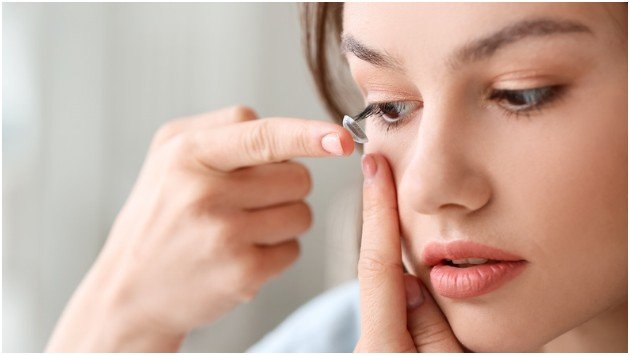
Switch to glasses for the rest of the day, even when the eye feels normal. The surface may remain irritated after removal.
Do not resume contact lens wear while you have pain, redness, tearing, light sensitivity, discharge, or blurred vision. The CDC recommends removing contacts and calling an eye doctor when symptoms of keratitis occur.
Wait until the eye feels completely normal and follow your eye care provider’s instructions when an abrasion is suspected. Similar caution applies when deciding when it is safe to wear contacts after an eye exam, especially after dilating drops, corneal staining, or another procedure.
Use a fresh lens from an undamaged package when you restart. Never reuse the torn lens or pieces.
Why Did the Contact Lens Tear?
A soft lens may tear because it became dry, was pinched with fingernails, stuck to the package, or was removed too aggressively. Damage can also occur when a reusable lens has exceeded its replacement schedule.
Before inserting any lens, place it on your fingertip and inspect the edge. Discard it when you see a split, chip, uneven rim, or unusual fold.
Keep backup glasses and rewetting drops nearby. The CDC specifically recommends carrying current prescription glasses for situations when contacts must be removed.
Keep the Drama in Your Playlist, Not Your Cornea
My approach to what to do if a contact lens tears in your eye is deliberately unexciting: clean hands, plenty of lubrication, gentle movement, and no improvised tools.
Remove visible pieces without forcing them. Then use the two-check method to assess both the lens shape and your symptoms. When discomfort, redness, light sensitivity, or blurred vision remains, let an eye doctor finish the job. Your cornea does not award bonus points for stubbornness.
Frequently Asked Questions
1. Can a torn contact lens get lost behind my eye?
No. It may fold beneath an eyelid, but the eye’s surrounding tissues prevent it from moving behind the eyeball.
2. How do I know whether a contact lens fragment remains?
Ongoing grittiness, tearing, redness, pain, or blurred vision may indicate a remaining piece or a corneal abrasion.
3. Can I put another contact lens in after removing a torn one?
No. Wear glasses until the eye feels normal, and seek care if irritation or vision changes continue.
4. What drops should I use for a torn contact lens?
Use sterile saline intended for the eye, preservative-free artificial tears, or contact-lens rewetting drops rather than tap water.