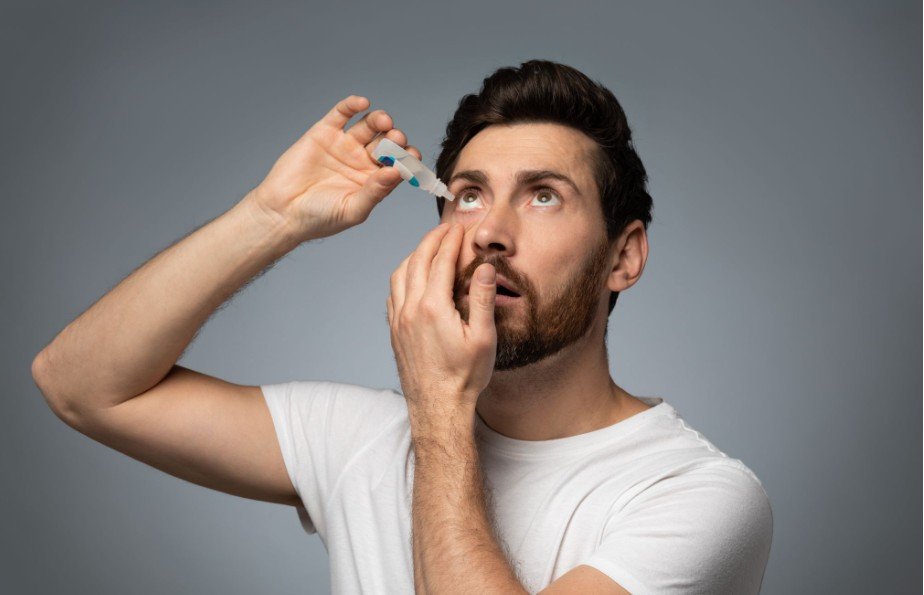
If dry, gritty eyes strike halfway through the day, you may wonder: can you use eye drops while wearing contacts without harming your lenses? Yes, but only when the product is approved for contact lens wear or your eye doctor confirms that it suits your lenses.
Artificial tears, allergy medications, redness relievers, and contact lens rewetting drops are not interchangeable.
I always recommend checking the US Drug Facts label and manufacturer directions. An incompatible formula may coat, discolor, cloud, or damage a lens and may increase irritation by holding ingredients against the eye longer than intended.
Which Eye Drops Are Safe to Use With Contacts?
Contact lens rewetting drops are usually the best option when lenses remain in your eyes. Manufacturers formulate them to lubricate the eye and rehydrate the lens surface. Look for wording such as “for contacts,” “contact lens compatible,” or “for use with soft and RGP lenses.”
Blink Contacts and Refresh Relieva for Contacts are US products marketed specifically for contact lens wearers. Their directions describe lubricating and rewetting compatible lenses. Check the exact package because brands may sell similarly named formulas with different instructions.
Approved rewetting drops may ease temporary dryness linked to screen use, air conditioning, heating, wind, or low humidity. They do not disinfect contacts and should never replace multipurpose contact lens solution. The American Optometric Association states that rewetting drops and saline products are not disinfectants.
Are Preservative-Free Artificial Tears Contact-Safe?
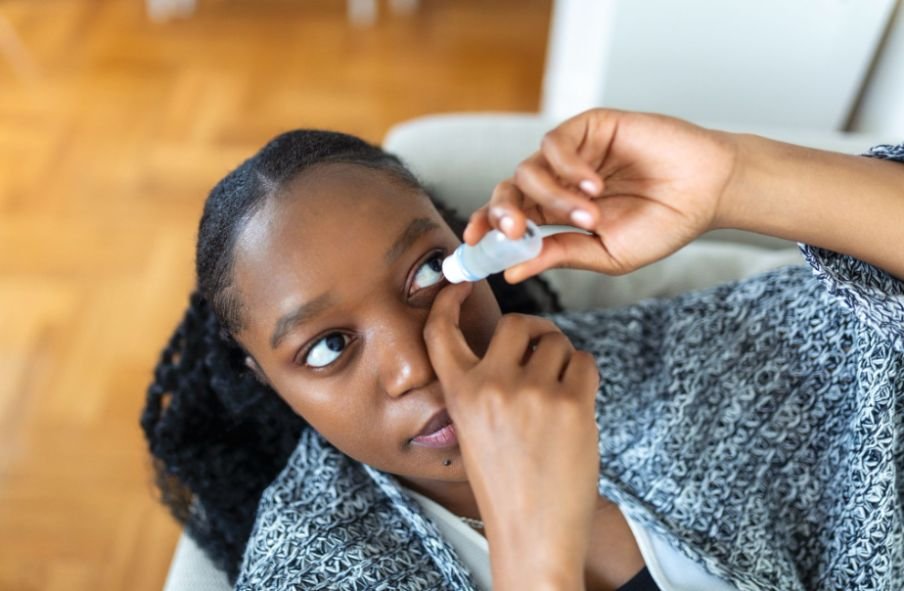
Preservative-free artificial tears can help people who need frequent lubrication or react to preservatives. Many come in single-use, twist-off vials.
However, “preservative-free” does not automatically mean “safe with every contact lens.” Some formulas are thick, oil-based, or intended only after lens removal. Confirm that the packaging approves use with your soft, rigid gas-permeable, hybrid, or scleral lenses. The AOA says preservative-free drops are generally safe with contacts but warns against drops that lack approval for contact lens wear.
Which Eye Drops Should You Avoid With Contacts?
Redness-relief drops should usually be avoided while contacts are in unless an eye-care professional directs otherwise. These products often use vasoconstrictors to make blood vessels less visible.
They may leave deposits, cause cloudiness, or hide redness related to dryness, overwear, inflammation, lens damage, or infection. The AOA advises contact wearers to avoid products marketed to “get the red out.”
Standard bottled dry-eye drops also require label checking. Some artificial tears contain oils, lipids, gels, or thickening ingredients that can leave a blurry film over soft lenses. A dry-eye drop may still be unsuitable during lens wear.
Most allergy and medicated drops should be applied after removing contacts. This includes many antihistamine, antibiotic, steroid, glaucoma, and anti-inflammatory products. A lens may keep medication or preservatives against the eye longer than intended. The American Academy of Ophthalmology advises removing contacts before using eye drops unless an ophthalmologist says otherwise.
Gels and ointments are generally incompatible with contacts because their thick texture can coat the lens and blur vision. They are usually used after lens removal, often before bedtime.
How Does the 15-Minute Rule Work?
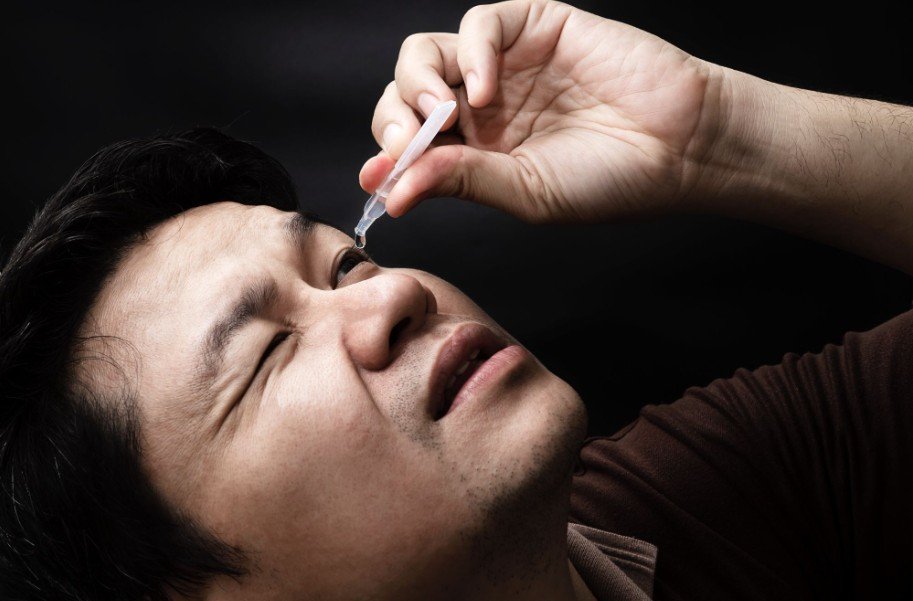
When a dry-eye, allergy, or medicated drop is not approved for use over contacts, remove your lenses with clean, dry hands. Apply the drop without touching the bottle tip to your eye, eyelashes, fingers, or another surface. Wait for the period stated on the label, then reinsert clean lenses.
A 10- to 15-minute wait is common, but it is not universal. The AAO (The American Academy of Ophthalmology) describes removing lenses, applying lubricating drops, and waiting before reinsertion. Prescription directions and your eye doctor’s advice always take priority.
The FDA emphasizes that eye drops must remain sterile because products applied to the eye bypass natural defenses. Never share a bottle or use one with a contaminated tip.
What If You Used the Wrong Eye Drops?
Remove your contacts promptly if an incompatible product causes burning, haze, or discomfort. Discard daily disposable lenses. Clean and disinfect reusable lenses as directed, although replacing a cloudy or coated lens may be safer.
Never rinse your eyes or contacts with tap water. The CDC warns that water exposure can increase the risk of serious contact lens infections.
Persistent redness, pain, light sensitivity, discharge, swelling, or sudden blurred vision requires professional attention. The CDC advises people with unusual irritation to remove their lenses, stop wearing them until an eye doctor approves, and arrange an examination.
Why Do Contacts Keep Feeling Dry?
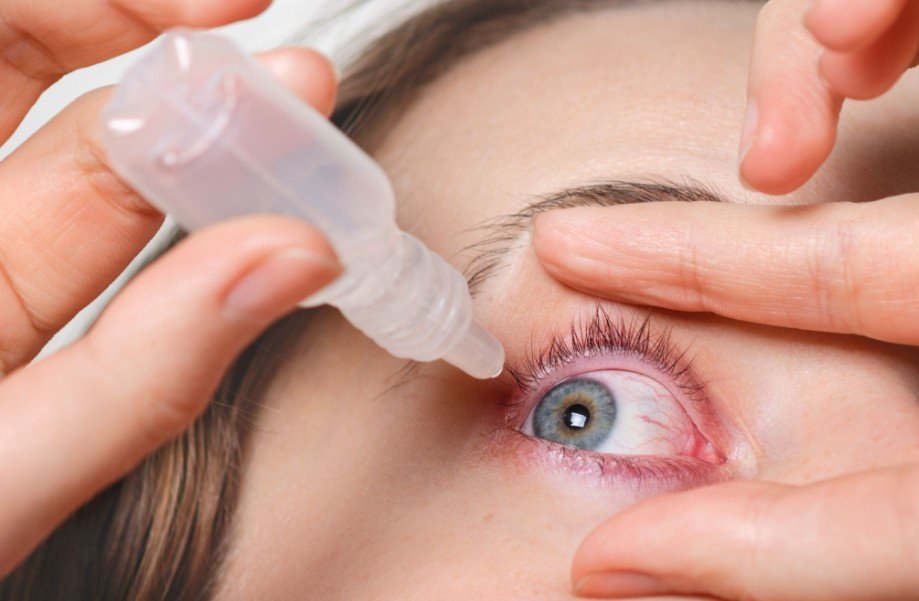
Frequent dryness can signal poor lens fit, extended wear, reduced blinking, allergies, eyelid inflammation, unsuitable lens material, or dry eye disease.
I would not use rewetting drops all day to mask recurring symptoms. An optometrist may recommend a different lens, daily disposables, a shorter wearing schedule, better screen habits, or treatment for the underlying condition.
Frequently Asked Questions
1. Can You Use Regular Artificial Tears With Contacts?
Only when the label approves use with your lens type. Otherwise, remove your contacts, apply the drops, and follow the stated reinsertion time.
2. Can You Use Allergy Eye Drops With Contacts In?
Most allergy drops require lens removal. Read the Drug Facts label and wait as directed before putting your contacts back in.
3. Can You Use Contact Lens Solution as Eye Drops?
No. Contact lens solution cleans, rinses, disinfects, or stores lenses. It is not a substitute for lubricating eye drops.
4. How Often Can You Use Rewetting Drops?
Follow the package directions and your eye doctor’s advice. If you need drops repeatedly to tolerate your lenses, schedule an eye examination.
The Bottom Line
So, can you use eye drops while wearing contacts safely? Yes, when the formula is labeled for contact lens use or your eye doctor confirms compatibility. Choose approved rewetting drops, verify preservative-free artificial tears before using them over lenses, and remove contacts before applying most redness, allergy, medicated, gel, or ointment products.
My rule is simple: trust the label, not assumptions. If your eyes stay painful, red, sensitive to light, or unusually blurry, remove your contacts and seek prompt professional care.