A contact lens should feel almost invisible, so when one eye suddenly feels gritty, sharp, dry, or blurry, your body is telling you something is wrong. If you have contacts uncomfortable in one eye only, the cause may be a torn lens, trapped debris, an inside-out contact, uneven dryness, or irritation on the surface of the eye.
The safest first move is to remove the lens rather than trying to blink through the discomfort. A minor lens problem may improve quickly, but pain, redness, light sensitivity, discharge, or blurred vision can point to a corneal injury or infection that needs prompt professional attention.
What Should You Do Immediately When One Contact Hurts?
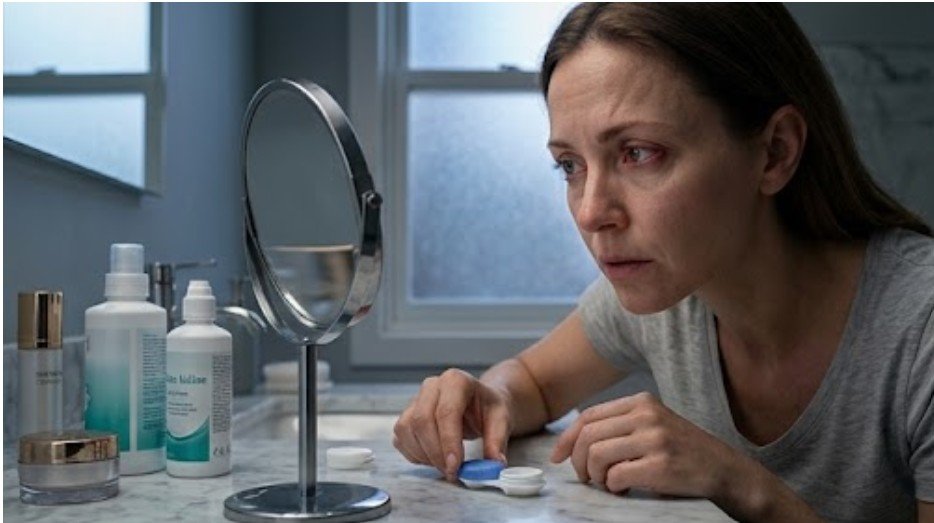
Wash and dry your hands, then remove the uncomfortable lens. Inspect it under a bright light for a tear, chip, jagged edge, makeup residue, or debris. A tiny defect can rub against the eyelid or cornea.
Check the lens orientation carefully. A correctly positioned soft contact usually looks like a smooth bowl with the edges pointing upward. An inside-out contact appears flatter, with edges that flare outward like a plate. If you wear daily disposable contacts, discard the lens rather than trying to clean and reuse it. Open a fresh lens only after the eye feels completely normal.
If a reusable lens has no visible damage, clean and rinse it with a fresh, sterile contact lens solution according to the manufacturer’s instructions. Never use tap water, bottled water, saliva, or old solution.
You may flush the eye with sterile saline or preservative-free artificial tears to help remove hidden debris. Do not insert another contact while the eye remains red, painful, watery, sensitive to light, or blurry.
Why Are Contacts Uncomfortable in One Eye Only?

Is the Contact Lens Torn, Chipped, or Inside Out?
A damaged or reversed lens commonly causes sudden discomfort. A microscopic tear may create a sharp or scratchy sensation, while an inside-out contact may move excessively, fold, or blur your vision.
Never reinsert a lens with a tear, chip, rough edge, or unusual shape. If a fresh replacement causes the same discomfort, the problem may involve the eye rather than the original contact.
Is Something Trapped Under the Contact?
Dust, cosmetic residue, lint, dried solution, or an eyelash can become trapped between the lens and the cornea. This commonly creates a gritty foreign-body sensation that becomes worse whenever you blink.
Remove the contact instead of rubbing the eye. Rubbing may push the object across the corneal surface and increase irritation. If the sensation continues after removal, an eye care professional should check for a corneal abrasion or another surface injury.
Can Protein Deposits or Bacteria Affect One Lens?
Protein, oil, and cosmetic deposits may collect unevenly when reusable contacts are not cleaned, disinfected, or replaced correctly. A single lens may also become contaminated by unwashed fingers, water, cosmetics, or a dirty storage case.
Microbial keratitis is a potentially serious corneal infection that can affect contact lens wearers. The CDC lists eye pain, redness, blurred vision, light sensitivity, excessive tearing, and discharge among the warning signs. Remove the lens and contact an eye doctor immediately when these symptoms develop.
Could You Have Scratched Your Cornea?

A corneal abrasion may happen during contact insertion or removal, after rubbing the eye, or when debris becomes trapped beneath the lens. Pain, excessive tearing, blurry vision, redness, light sensitivity, and a persistent feeling that something is stuck in the eye may continue after the lens comes out.
Do not attempt to treat a suspected abrasion with leftover antibiotic drops, steroid drops, or redness-relief products. An optometrist or ophthalmologist should examine the cornea and determine the appropriate treatment.
Can Dry Eye Affect Only One Side?
Yes. Tear-film quality, eyelid position, oil-gland function, airflow exposure, and previous eye irritation may differ between the eyes. One eye may therefore become dry, gritty, or blurry while the other remains comfortable.
Learning why eyes feel dry after removing contact lenses can also help identify whether extended wear, reduced blinking, low humidity, lens dehydration, or removal friction is contributing to one-sided discomfort.
Air conditioning, heating vents, ceiling fans, open car windows, and long screen sessions may worsen contact lens dryness. Ask your eye doctor whether contact-lens-compatible rewetting drops are appropriate. Never apply an eye drop over contacts unless the label specifically says it is safe for contact lens wear.
What If the Lens Does Not Fit One Eye Correctly?
Your two corneas may have slightly different shapes. A lens can center correctly on one eye but fit too tightly, move too much, or sit off-center on the other.
Poor contact lens fit may cause pressure, dryness, excessive movement, fluctuating vision, or persistent lens awareness. Toric contacts used for astigmatism can also rotate, causing vision to shift in and out of focus.
Recurring symptoms deserve a professional contact lens evaluation. Do not experiment with different brands, prescriptions, or base curves without an eye care professional.
When Is One-Eye Contact Lens Discomfort Urgent?

Keep the lens out and contact an eye care professional immediately when the pain is severe, becomes worse after removal, or occurs with extreme sensitivity to light.
Yellow, green, or unusual watery discharge also requires attention. Persistent redness that does not improve, swelling, hazy vision, reduced vision, sudden blurring, or difficulty opening the eye may indicate a corneal injury, inflammation, or infection.
The FDA identifies discomfort, burning, grittiness, unusual redness, blurred vision, swelling, pain, excessive tearing, discharge, and light sensitivity as possible signs of contact lens irritation or infection. The American Optometric Association advises contact lens wearers to seek immediate professional care for redness, pain, irritation, or blurred vision.
How Can You Prevent One-Sided Contact Lens Irritation?
Follow the replacement schedule prescribed for your exact contacts. Wash and dry your hands before handling them, use fresh disinfecting solution every time, and replace the storage case regularly.
Understanding can dehydration affect eyesight and eye health signs may also help explain why contact lenses sometimes feel drier, blurrier, or less comfortable. Although drinking more water cannot correct poor lens fit or an infection, maintaining normal hydration may support tear production and overall eye-surface comfort.
Never top off old solution with new solution. Avoid sleeping in contacts unless your eye doctor has specifically approved overnight wear. Do not expose lenses to shower, swimming pool, lake, ocean, or hot-tub water.
Keep a pair of updated prescription glasses nearby. Backup glasses make it easier to remove an irritating contact promptly instead of continuing to wear it.
Frequently Asked Questions
1. Can I Put in a New Contact After Removing the Painful One?
Only consider a fresh lens when the eye feels completely normal and has no redness, watering, pain, light sensitivity, discharge, or blurred vision. Otherwise, wear glasses and contact an eye doctor.
2. Why Does My Contact Hurt Every Time I Blink?
A torn lens edge, trapped debris, an inside-out contact, or a scratched cornea may cause pain when blinking. Remove the lens and seek professional care if the discomfort continues afterward.
3. Why Is One Contact Blurry While the Other Is Clear?
The lenses may have been switched, or one lens may be dirty, damaged, dry, poorly fitted, or rotating because of astigmatism. Recurring blurry vision requires a contact lens examination.
4. Should I Clean and Reinsert an Uncomfortable Contact?
You may clean a reusable, undamaged lens with fresh sterile solution, but do not reinsert it until the eye feels completely normal. Discard daily disposables and any lens with a tear, chip, or rough edge.
Final Takeaway
If you notice contacts are uncomfortable in one eye only, treat the difference as useful information rather than a minor annoyance. Remove the lens, inspect it carefully, switch to glasses, and monitor how the eye feels without the contact.
A fresh lens may solve a simple orientation or debris problem. However, continuing pain, redness, discharge, light sensitivity, hazy vision, or reduced vision requires prompt professional eye care.