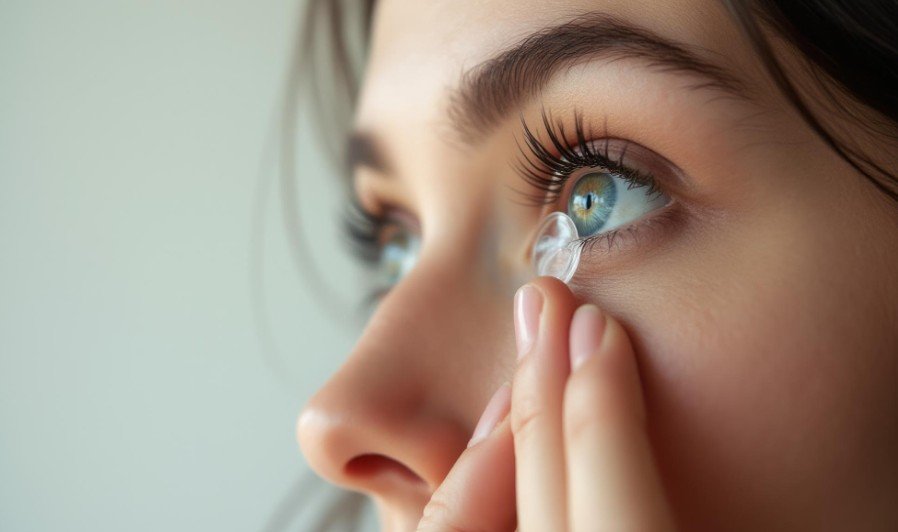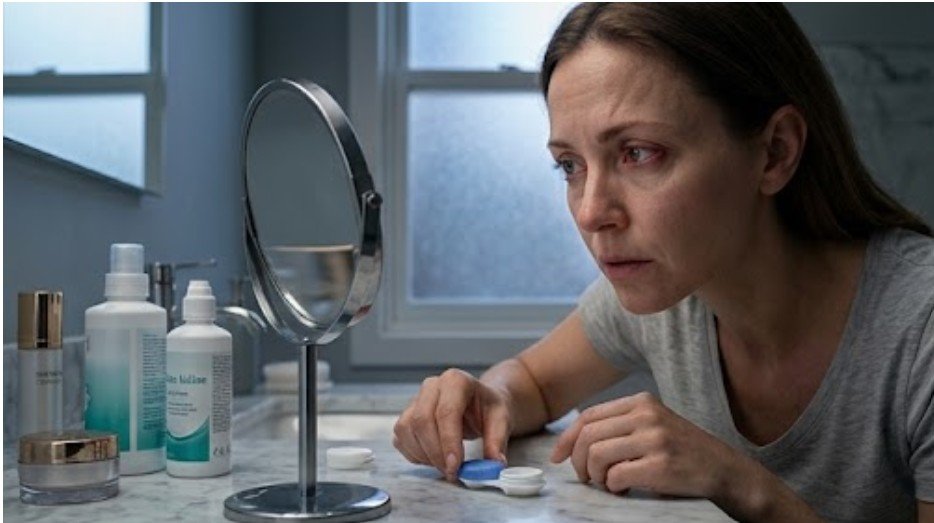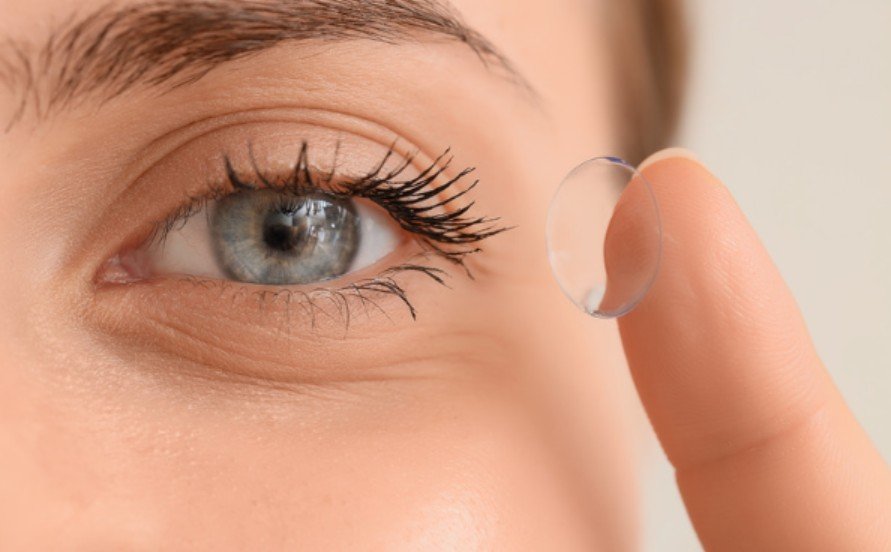

Taking out your contacts should bring relief, not leave your eyes burning, gritty, or tight. When eyes feel dry after removing contact lenses, the discomfort usually reflects what happened to your tear film throughout the day.
A soft lens behaves somewhat like a sponge. It divides the tear film, while reduced blinking, dry air, and long wear speed up evaporation. If the lens becomes dehydrated, removing it may disturb delicate surface cells and make that parched feeling more noticeable.
Why Do My Eyes Feel Dry and Gritty After Taking Out Contacts?
Your tear film keeps the cornea smooth, moist, and clear. Contact lenses change how it spreads and evaporates. By evening, it may be unstable after hours of screen use, air conditioning, heating, wind, or low humidity.
A dry lens may also fit more tightly. Pinching or dragging it during removal can increase friction and leave a temporary foreign-body sensation. The National Eye Institute lists burning, scratchiness, redness, and blurry vision among common dry eye symptoms.
What Should I Do Immediately After Removing Dry Contacts?

Start with preservative-free artificial tears. Add a few lubricating drops after removal to restore moisture and reduce friction. Do not confuse artificial tears with redness-relief drops, and never put cleaning solution directly into your eyes. Preservative-free drops contain fewer additives.
Place a clean, comfortably warm, damp washcloth over your closed eyelids for five to ten minutes. Warm compresses may help eyelid glands release oils that slow evaporation. Keep the cloth warm, not hot.
Wear glasses for the rest of the evening. Avoid rubbing your eyes, inserting fresh contacts, or staring at screens immediately after removal. Blink gently and move away from fans, smoke, vents, and air-conditioning airflow.
How Can I Remove Contacts Without Irritating Dry Eyes?
Hydrate before removal. Use one or two drops labeled as contact-lens-safe rewetting drops, blink several times, and wait briefly before pinching the lens. This helps a dehydrated lens move more freely.
Wash and dry your hands first. If a lens does not slide easily, add approved drops and try again after blinking. Seek professional help if it seems stuck or a torn piece may remain.
Which Habits Cause Post-Removal Contact Lens Dryness?
Long wear time commonly causes end-of-day discomfort. Many people notice declining comfort after about 10 to 12 hours, but the correct limit depends on the lens and your optometrist’s instructions. Follow your prescribed schedule and never sleep or nap in contacts unless your provider approved overnight wear. The CDC advises avoiding sleep in lenses unless directed by an eye care provider.
Screen use also reduces full blinking. Take visual breaks, position the screen slightly below eye level, and make deliberate complete blinks. Low humidity, heating, air conditioning, wind, deposits, makeup, allergens, lens damage, and poor fit can add irritation.
People who regularly experience dry contact lenses in a heated office may find that warm HVAC airflow and reduced indoor humidity accelerate tear evaporation throughout the workday, leaving the eyes especially uncomfortable after lens removal. Repeated dryness in one eye deserves an optometrist’s attention.
Could My Contact Lens Solution Be Causing Irritation?

Some wearers react to preservatives in multipurpose solutions. Ask your eye care provider whether another product, a preservative-free option, or a hydrogen peroxide system may suit you better.
Hydrogen peroxide systems require careful handling. Use the supplied special case and allow full neutralization. The FDA warns that unneutralized peroxide can cause severe burning, irritation, and corneal damage.
Never top off old solution, reuse disinfecting liquid, or rinse lenses and cases with tap water. The CDC explains that water can expose contacts to microorganisms linked to eye infections.
Is It Dry Eye, a Corneal Scratch, or an Infection?
Mild dryness often causes temporary burning, grittiness, tired eyes, or vision that clears after blinking. It should improve with lubrication, glasses, and a break from lens wear.
A corneal abrasion may cause sharp pain, tearing, light sensitivity, or the feeling that something remains under the eyelid. Keratitis or another infection may cause worsening redness, discharge, significant pain, or sudden blurry vision. Contact lens wear increases keratitis risk.
When Should I See an Eye Doctor?
Keep contacts out and seek prompt care from a US-licensed optometrist or ophthalmologist for severe pain, persistent redness, extreme light sensitivity, thick discharge, unusual tearing, or blurry vision that does not improve. The National Eye Institute advises calling an eye doctor if these symptoms persist or worsen.
How Can I Prevent Dryness After Wearing Contacts?

Follow your replacement schedule, use fresh solution, replace the case regularly, and keep contacts away from shower, pool, and tap water. Discard torn lenses and attend routine exams. The FDA regulates contacts as medical devices, so material, prescription, and fit need professional guidance.
Some reusable-lens wearers may benefit from learning more about monthly contact lenses for people with dry eyes. Comfort depends on the lens material, surface wettability, fit, cleaning system, daily wearing time, and strict replacement habits, so monthly lenses should be selected with professional guidance rather than cost alone.
If dryness keeps returning, ask whether daily disposables, another lens material, a shorter wear schedule, or treatment for evaporative dry eye could help.
Frequently Asked Questions
1. Why Do My Eyes Burn After I Remove My Contacts?
Burning can result from evaporation, extended wear, deposits, solution sensitivity, or friction. Leave the lenses out and use artificial tears. Seek care if burning becomes painful or affects vision.
2. Can I Use Artificial Tears After Taking Out My Lenses?
Yes. Preservative-free lubricating drops may suit frequent use, but follow the label and ask your eye doctor which product fits your needs.
3. Should I Wear Contacts Tomorrow if My Eyes Still Feel Dry?
No. Wear glasses while your eyes remain red, painful, gritty, or unusually dry. Reinserting a lens may worsen irritation.
4. Why Does It Feel Like Something Is Still in My Eye?
Dryness, debris, eyelid irritation, a torn lens fragment, or a corneal abrasion can cause that sensation. Arrange an examination if it persists.
Give Your Eyes Time to Recover
When eyes feel dry after removing contact lenses, I treat the discomfort as useful feedback. Lubricate the eyes, apply a warm compress, switch to glasses, reduce screen exposure, and review your wear time.
Better blinking, correct solution use, pre-removal rewetting drops, and professional fitting can prevent repeat episodes. When symptoms worsen instead of improving, prompt eye care is the safest next step.