When I first considered replacing my glasses with contact lenses, I liked the freedom they promised but felt nervous about touching my eyes. That hesitation is completely normal. Daily disposable contact lenses for first time wearers can make the transition easier because each morning starts with a fresh pair, and each evening ends by discarding them.
There is no lens case to maintain, no cleaning solution to measure, and no replacement date to remember. However, a simple care routine does not eliminate the need for a professional fitting, careful handling, and good eye-health habits.
Why Daily Disposable Contacts Are Beginner-Friendly
Daily disposables are single-use lenses worn during the day and thrown away after removal. They should not be confused with reusable daily-wear contacts, which are also removed before sleeping but cleaned and stored for another day.
Opening a fresh pair each morning reduces the problems associated with dirty storage cases, old solution, and deposits that accumulate on reusable lenses. Daily lenses are also convenient for occasional wear, travel, exercise, social events, and people with busy schedules.
The main disadvantage is cost. Wearing a new pair every day may cost more over time than using biweekly or monthly lenses. Individual packaging can also create additional waste. Most importantly, no single lens brand is comfortable or suitable for everyone.
Begin With a Professional Contact Lens Fitting

A glasses prescription does not provide all the information needed to purchase contact lenses. Contacts rest directly on the eye, so an eye-care professional must evaluate the correct power, diameter, curve, coverage, movement, and overall fit.
During the fitting, you may be given trial lenses. The clinician will examine how they settle on your eyes and test the stability of your vision. Your tear film, blinking pattern, corneal shape, eye health, and lifestyle can all influence the final recommendation.
Tell the clinician about allergies, dry eyes, medications, extended screen use, work conditions, and how frequently you intend to wear contacts. Options are available for nearsightedness, farsightedness, astigmatism, and age-related near-vision difficulties.
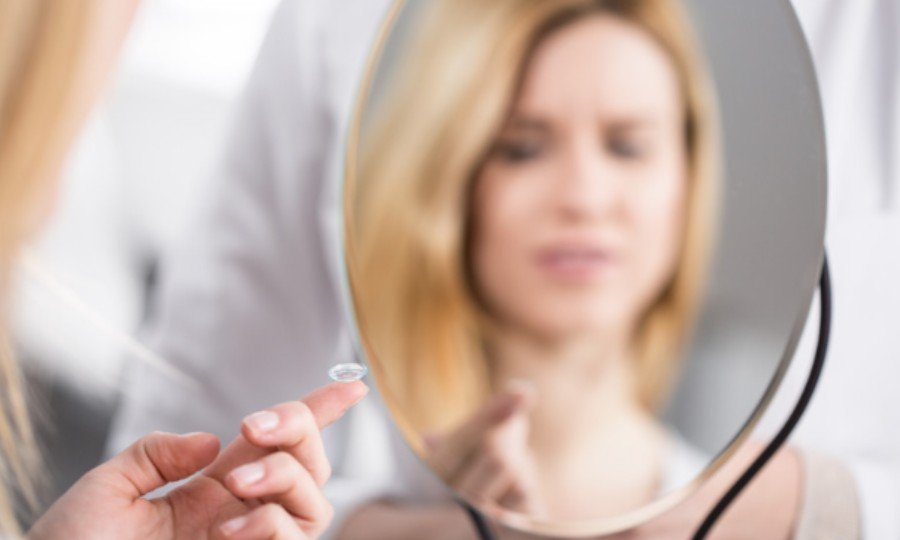
Practise in a calm, well-lit room with a clean surface. Avoid inserting your first pair when you are rushing to work, school, or an important event.
Wash your hands with soap, rinse them thoroughly, and dry them using a lint-free towel. Wet or dirty fingers can make the lens harder to handle and may transfer contaminants to your eye.
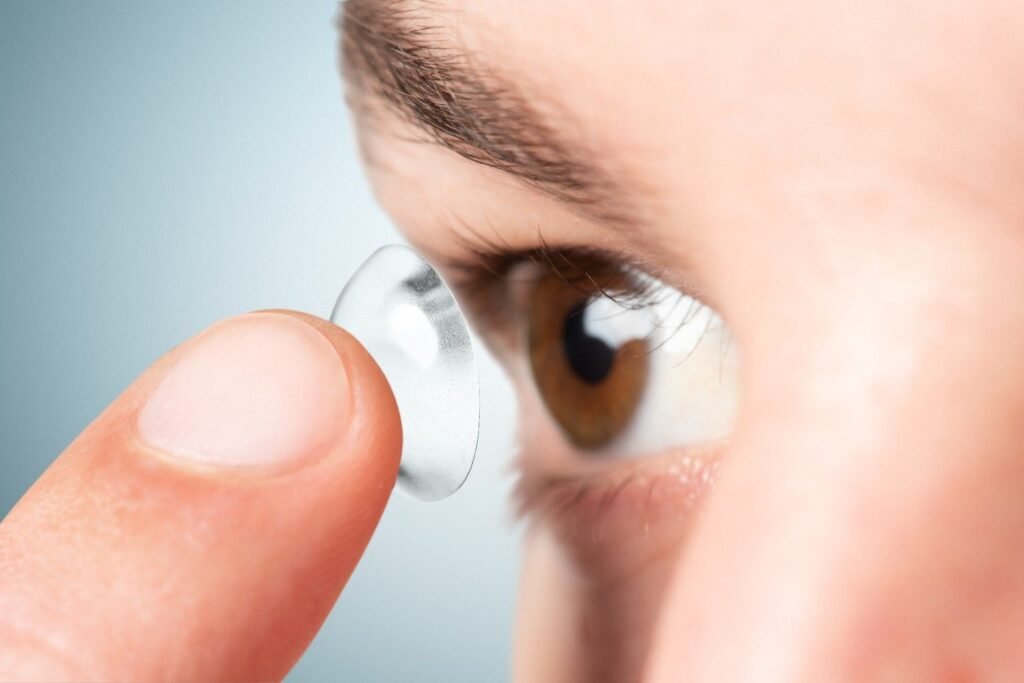
Place the lens on the tip of a dry index finger. A correctly oriented lens should resemble a smooth bowl with upright edges. If the edges flare outward like a shallow plate, it may be inside out.
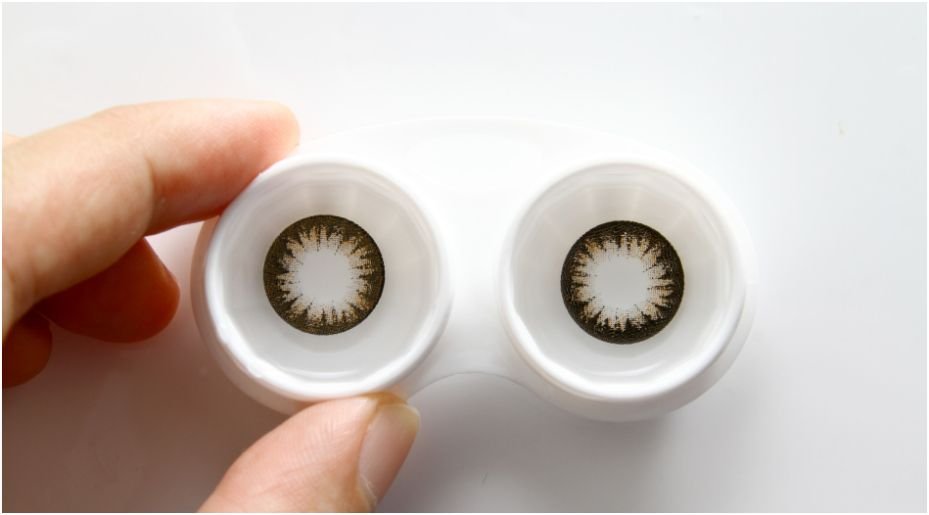
Keep your right and left lenses separate when the prescriptions differ. Carry your glasses, an unopened spare pair, and any contact-lens-compatible drops recommended by your eye-care professional.
How to Insert Daily Contact Lenses
Follow the Same Steps Each Time
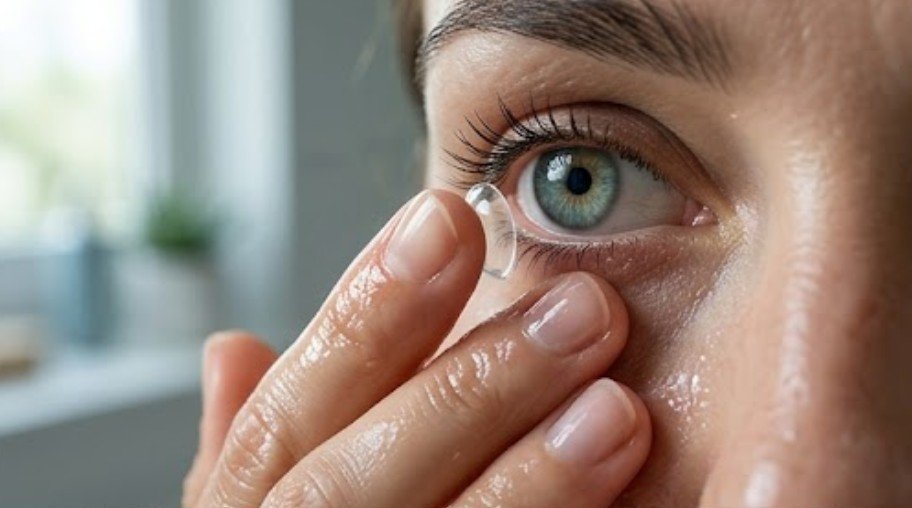
Place the lens on your index finger. Use the middle finger of that hand to pull down your lower eyelid. Hold the upper eyelid firmly with your other hand so you cannot blink during insertion.
Look straight ahead or slightly upward, then gently place the lens on the eye. Slowly release your eyelids and blink several times. The lens should naturally move into the correct position.
If the lens folds, falls onto an unclean surface, becomes damaged, or causes immediate discomfort, discard it and open another package. Never rinse a disposable lens with tap water or saliva.
What Should New Contacts Feel Like?
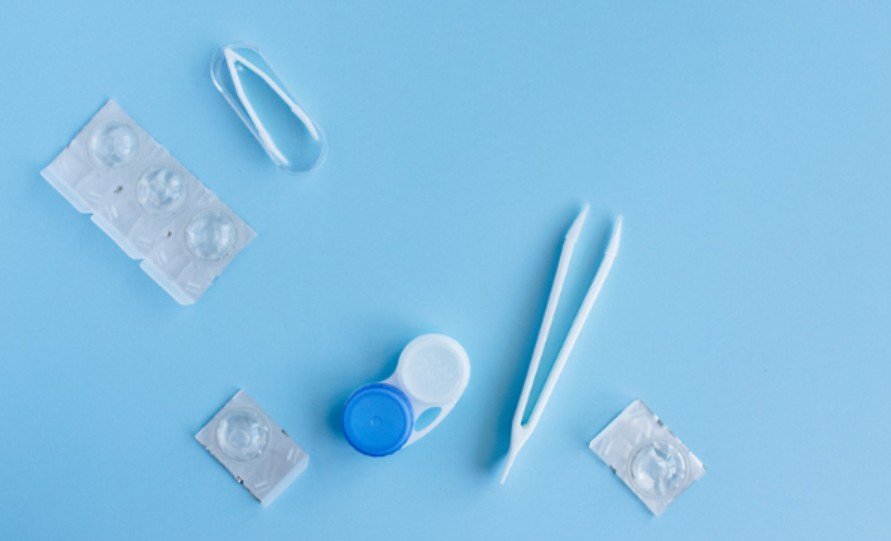
Beginners may initially notice mild lens awareness, particularly while blinking. This sensation should improve as the lens centres and the eyes become accustomed to it. Your vision should remain clear and stable.
Sharp pain, persistent redness, strong burning, discharge, unusual light sensitivity, or worsening blurred vision should not be treated as normal adjustment symptoms. Remove the lens and contact your eye-care professional.
Dryness may become noticeable during long periods of computer or phone use because screen users often blink less frequently. Take regular visual breaks, blink fully, and use only drops approved for contact lenses.
Build a Safe First-Week Routine
Your first week should focus on learning the technique rather than achieving the longest possible wear time. Follow the schedule provided during your fitting. Your clinician may recommend starting with shorter periods and gradually increasing them as your eyes adjust.
Insert lenses before applying eye makeup and remove them before taking makeup off. Keep creams, powders, sprays, and cosmetics away from the lens surface.
Do not sleep, shower, swim, or enter a hot tub while wearing daily contacts. New wearers should also understand can you swim with contacts in before visiting pools, beaches, or hot tubs, because water exposure can trap harmful microorganisms against the eye and increase infection risk.
Water can expose the lenses and eyes to potentially harmful organisms. Even clean-looking water is not considered safe for contact lens care.
A daily disposable lens must be discarded once it has been removed. Do not place it in solution for later use, even when it appears undamaged. Open a fresh package when you want to wear contacts again.
How to Remove Daily Contact Lenses
Wash and completely dry your hands. Look upward and pull down your lower eyelid. Slide the lens toward the white part of the eye, then gently pinch it between the pads of your thumb and index finger.
Avoid using your fingernails because they may scratch your eye or tear the lens.
When a lens feels dry or difficult to move, blink several times and apply approved rewetting drops. Allow the lens time to loosen before trying again. Never forcefully pull at a lens that feels stuck.
Discard each lens immediately after removal. Make a note of recurring dryness, blurry vision, redness, or discomfort so you can discuss these symptoms at your follow-up appointment.
Frequently Asked Questions
1. Are daily disposable contact lenses for first time wearers a suitable choice?
They can be convenient because they require no nightly cleaning, but suitability depends on your prescription, eye health, fit, comfort, and professional recommendation.
2. How long should I wear contacts on my first day?
Follow the personalised wear schedule provided by your eye-care professional rather than using a universal time limit.
3. Can I remove a daily contact and reinsert it later?
Discard the removed lens and open a fresh one when you are ready to wear contacts again.
4. Why is my vision blurry after inserting a contact lens?
The lens may be inside out, off-centre, dry, damaged, contaminated, or placed on the wrong eye.
Final Thoughts
I appreciate daily contacts because they reduce lens care to a straightforward open, wear, remove, and discard routine. Once insertion and removal become familiar, the entire process usually feels far less intimidating.
Still, convenience must be supported by safe habits. A professional fitting, clean and dry hands, gradual practice, water avoidance, and prompt attention to discomfort create the strongest foundation for comfortable contact lens wear.