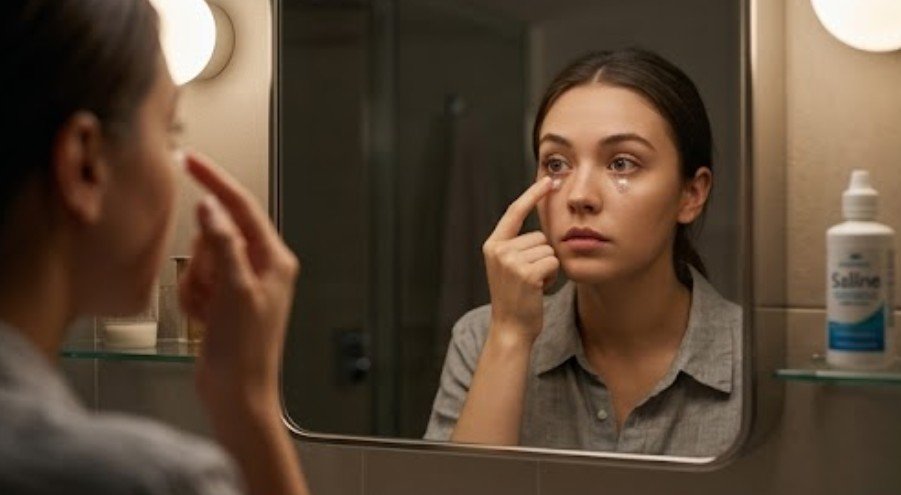
Facing a stubborn contact lens stuck flat against your cornea can instantly trigger a wave of panic. Standing over the sink with a red, tearing eye makes anyone feel like they are one wrong move away from damaging their vision.
The secret to fixing this stressful moment sits right in your bathroom cabinet, starting with a simple bottle of sterile saline solution. Knowing exact techniques for how to remove stuck contact lens situations turns a scary ordeal into a quick fix.
Key Takeaways
- Contacts cannot slip behind your eyeball because the conjunctiva lining physically blocks them completely.
- Rehydrating a dry lens with sterile saline or rewetting drops is essential before touching your eye.
- Avoid using fingernails, tweezers, tap water, or aggressive eye rubbing to prevent dangerous corneal abrasions.
- Massage eyelids gently or change look direction to free displaced, folded, or stubborn contacts safely.
- Persistent eye pain, vision changes, or stuck broken pieces require immediate attention from an eye doctor.
Learning How to Remove Stuck Contact Lens
Why a Contact Lens Gets Stuck
We’ve all been there—standing in front of the mirror late at night, wondering why a contact lens refuses to come out. Knowing how to remove a stuck contact lens safely can help you stay calm, prevent corneal scratches, and avoid an unnecessary trip to urgent care.
A stuck contact lens is usually caused by simple physical changes rather than a medical emergency. Contact lenses normally float on a thin layer of natural tears covering the cornea. When this moisture evaporates, the lens becomes dry, rigid, and less flexible, creating a suction-like effect that causes it to cling to the eye.
Common Causes of a Stuck Contact Lens
Several everyday habits can dry out your lenses and make removal difficult. Falling asleep while wearing daily lenses, spending long hours in air-conditioned environments, or staring at digital screens without blinking enough can reduce the eye’s natural moisture.
Understanding how long can you wear contacts can help prevent excessive dryness, lens adhesion, irritation, and difficult removal at the end of the day. As the lens dries, it adheres more firmly to the cornea.
In some cases, rubbing your eyes or blinking forcefully can cause a soft lens to fold and shift beneath the upper eyelid, making it difficult to locate or remove.
Can a Contact Lens Get Lost Behind Your Eye?
No. A contact lens cannot travel behind your eye. The conjunctiva—a thin protective membrane—lines the inside of your eyelids and folds over the white part of your eye, creating a sealed barrier. While a lens may become tucked beneath your upper eyelid, it always remains on the front surface of the eye.
Prepare Before Removing the Lens
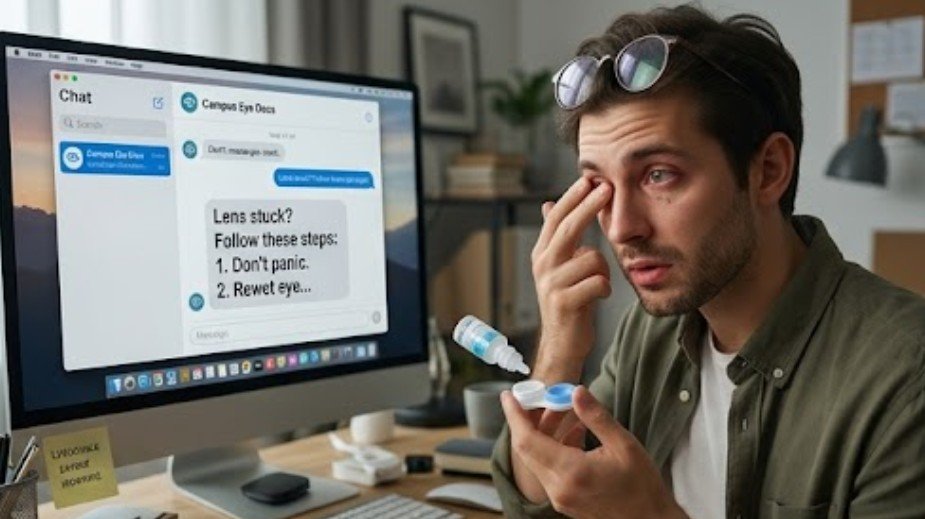
Trying to remove a dry contact lens with unwashed hands can introduce bacteria into the eye and increase the risk of corneal scratches or infections such as keratitis. Spending a minute preparing properly makes the process much safer.
Wash and Dry Your Hands
Wash your hands thoroughly with warm water and fragrance-free antibacterial soap, paying special attention to cleaning beneath your fingernails. Dry them completely using a lint-free microfiber towel to prevent loose fibers from transferring to your fingers and into your eye.
Gather the Right Supplies
Keep contact lens rewetting drops or sterile saline solution nearby before attempting removal. Never use tap water, saliva, or homemade saline solutions, as these are not sterile and may contain microorganisms that can cause serious eye infections. Finally, place a clean, light-colored towel over your sink drain so you can easily recover the lens if it falls during removal.
You should also know how often to change a contact lens case, since an old or contaminated case can expose reusable lenses to bacteria and increase the risk of eye infections.
Guide for Removing Stuck Contact Lens
Taking a soft lens off a dry cornea or retrieving a hidden piece demands plenty of fluid and absolute patience to avoid rubbing your itchy eyes.
If the Contact Is Stuck in the Center
Flush and Blink: Saturate the eye with rewetting drops or sterile saline and blink repeatedly. A dehydrated lens simply needs moisture to become movable again.
Massage: With your eye closed, gently rub your upper eyelid until you feel the lens loosen.
Pinch to Remove: Once the lens shifts onto the white of your eye (the sclera), use the pad of your finger to gently slide it off, or use a gentle pinching motion. Never use your fingernails directly on your eyeball.
If the Contact Is Under Your Eyelid or Off-Center
Look the Other Way: If the contact is stuck under your upper eyelid, look down. If it is to the left, look to the right.
Pull and Blink: Pull the skin at the outer corner of your eye toward your ear while holding your eye wide, then blink forcefully a few times to let the natural eyelid action pop the contact out.
Locate and Slide: Try using a clean Q-tip to gently flip your upper eyelid, which often reveals a hidden lens. Gently sweep it down toward the white of your eye to grab it.
For Rigid Gas Permeable (Hard) Contacts
Do Not Rub: Because hard lenses are stiff, massaging them vigorously can scratch your cornea.
Break the Suction: Wash your hands and gently press your fingertip on the white of your eye just past the edge of the lens to break the suction.
Use a Suction Cup: If you are familiar with using a small, soft contact lens suction cup (available at drugstores), you can press it onto the center of the lens to pull it free.
Important Safety Warnings
Do not use tweezers or other sharp tools under any circumstances. Never use tap water or saliva to rinse your eye, as this can cause serious infections like Acanthamoeba keratitis.
If your eye becomes intensely red, is in severe pain, or you cannot get the lens out, seek professional help immediately by contacting an optometrist or ophthalmologist.
Expert Aftercare and Eye Recovery Strategies

Once that stubborn lens leaves your eye, your optical surface needs time to rest, recover, and regain its natural protective tear film.
Throw away a daily disposable lens immediately after a difficult removal process, as the material likely sustained small retinal tears during your attempts. If you wear monthly or biweekly lenses, inspect the plastic carefully under bright light for cracks or jagged edges before soaking it in fresh multi-purpose solution.
Switch to wearing your backup eyeglasses for the rest of the day to let your delicate cornea recover from the friction. Instill a few preservative-free artificial tears over the next few hours to soothe mild redness, and avoid putting a fresh lens into an irritated eye.
Frequently Asked Questions
1. How do you remove contact lenses that won’t come out?
Wash your hands, then lubricate your eye heavily with sterile saline or contact lens rewetting drops. Close your eye, gently massage your eyelid to dislodge the lens, and slide it onto the white of your eye to pinch it out.
2. Will a stuck contact eventually come out?
Yes, a stuck contact will come free once properly lubricated. Natural tears combined with sterile rewetting drops break the suction seal, allowing the lens to shift off the cornea so you can remove it safely without force.
3. What happens if you can’t get contact lenses out?
Leaving a stuck lens in your eye causes severe corneal dryness, irritation, and inflammation. If home lubrication methods fail after twenty minutes, contact an optometrist immediately to prevent corneal scratches or serious eye infections.
4. What is the best trick to remove contact lenses?
The best trick for how to remove stuck contact lens issues is flooding your eye with sterile saline, looking in the opposite direction of the stuck lens, sliding it onto the sclera, and gently pinching it away.
Master How to Remove Stuck Contact Lens Like a Pro!
Dealing with a stubborn, stuck contact lens feels frightening, but staying calm and applying proper lubrication will always solve the issue without harming your sight. Master the skill of how to remove stuck contact lens troubles by keeping non-sterile water far away, using finger pads instead of sharp nails, and resting your eyes with backup glasses whenever removing a difficult lens.